
A Comprehensive Journey Through the Evolution of Cameras and Photography
Explore the fascinating history of camera development from ancient optical devices to modern digital systems. Learn about key innovations, early pioneers, and how photography became accessible to everyone, transforming how we capture and preserve memories across centuries.
Ancient Optical Foundations
The earliest references to camera-like devices date back to ancient times. Aristotle, the Greek philosopher, described a device resembling a camera obscura, a dark chamber that projected an inverted image of the outside world onto its interior surface. This concept is believed to have originated as early as the 4th century BCE. Similarly, Chinese philosopher Mozi, around 470-391 BCE, documented observations about light traveling in straight lines, explaining why images appear inverted in the camera obscura. These early insights laid the groundwork for future developments in optics and imaging technology.
Medieval and Arab Contributions
In the 11th century, Arab physicist Ibn al-Haytham (Alhazen) authored a groundbreaking book on optics titled "Book of Optics." His work systematically explained how light behaves through lenses and pinholes, and he was among the first to describe the camera obscura in detail. His studies significantly advanced understanding of vision and optics, which directly influenced the development of imaging devices.
Renaissance to Early Modern Innovations
Moving forward, the Renaissance period witnessed renewed interest in optical devices. Around the late 17th century, Johann Zahn envisioned a compact, portable camera-like device suitable for practical photography. His designs incorporated glass lenses and mechanisms that hinted at the potential for capturing images efficiently. However, technological limitations prevented widespread use at that time. It was not until the 19th century that these ideas materialized into functional cameras.
The Advent of Photographic Film and Camera Development
In the 19th century, remarkable progress was made in photographic technology. Innovations in chemical processes led to the creation of photographic plates that could capture images on glass or metal surfaces. These plates were relatively cumbersome but produced high-quality images suitable for art and documentation. The invention of roll film by George Eastman in 1884 and 1888 revolutionized photography by making it more accessible and portable. Eastman’s introduction of the Kodak camera in 1888 marked a major milestone: a simple handheld camera preloaded with film capable of taking 100 exposures. This user-friendly device was a game-changer, making photography possible for the masses. Customers could send their film to Eastman’s company for processing, leading to the commercial boom of amateur photography.
From Box Cameras to Digital Era
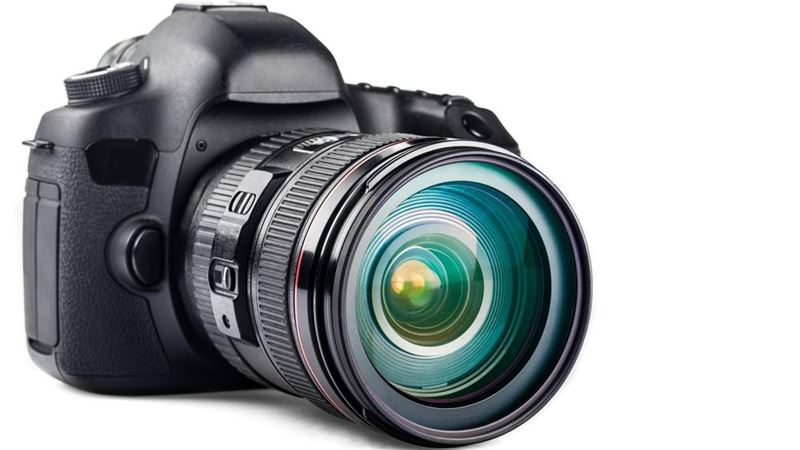
Throughout the late 19th and early 20th centuries, camera technology continued to evolve rapidly. Foldable cameras, more advanced lenses, and improved film quality emerged, expanding creative possibilities for photographers. In 1900, the Brownie camera, an affordable box camera using roll film, became hugely popular among ordinary users, democratizing photography even further. Despite these advances, professional photographers and scientists continued to rely on photographic plates for their superior quality and resolution. They remained the gold standard into the late 20th century. However, the digital revolution in the late 20th and early 21st centuries completely transformed the industry. Digital sensors replaced chemical film, enabling instant image capture, processing, and sharing. Today’s cameras include high-resolution DSLRs, mirrorless systems, and even smartphone cameras, all built upon decades of innovation.
Current Trends and Future Directions
Modern cameras leverage cutting-edge technology, such as artificial intelligence, image stabilization, and 4K or 8K video recording, to enhance user experience. The industry continues to evolve with advancements in lens design, sensor technology, and connectivity options. Furthermore, the emergence of mirrorless cameras and smartphone photography has made high-quality imaging more accessible than ever. As the industry moves forward, sustainability and eco-friendly manufacturing practices are increasingly prioritized, along with efforts to develop more compact, versatile, and affordable devices. The history of cameras reflects a compelling story of human curiosity, technological ingenuity, and artistic aspiration, capturing the world as it changes around us.
Tag: Camera and Camcorders.