
Essential Guide for Choosing the Right Chainsaw for Your Needs
This comprehensive guide covers essential tips for choosing the right chainsaw based on your needs, including understanding different types, safety features, and brand recommendations. Learn how to select a model suitable for light pruning, heavy-duty logging, or professional forestry work. Safety considerations, technological innovations, and maintenance tips are also included to help you operate your chainsaw confidently and safely for years to come.
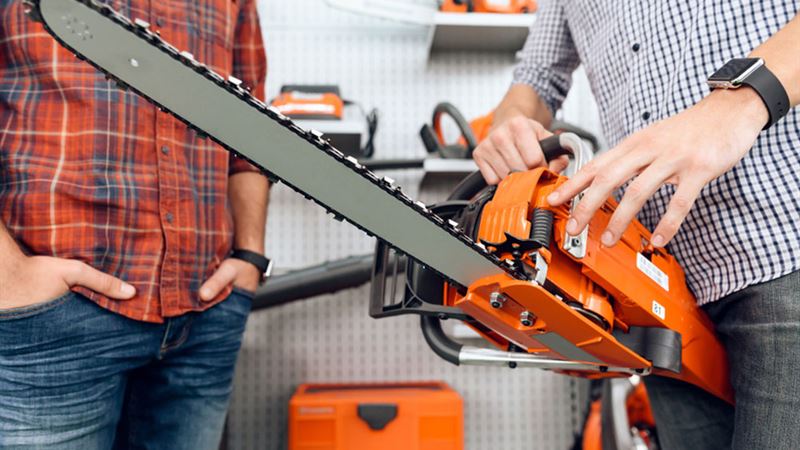
Chainsaws are powerful tools widely used in forestry, landscaping, construction, and home maintenance. They are essential for cutting down trees, pruning branches, and processing wood, making them invaluable for both professionals and homeowners. Understanding how a chainsaw operates and selecting the right model can significantly improve safety, efficiency, and overall performance. In this comprehensive guide, we will explore the mechanics of chainsaws, different types available, safety features, and tips for choosing the best chainsaw tailored to your specific needs.
The core component of a chainsaw is its engine or motor, which drives the chain along the guide bar to perform cutting tasks. When the chain rotates at high speeds, it slices through wood with ease. The strength of the engine and the length of the guide bar determine the size and type of wood the chainsaw can handle effectively. For instance, larger guide bars are suitable for felling big trees or cutting through thick logs, whereas shorter bars are ideal for lighter pruning and trimming.
Safety is paramount when operating a chainsaw. One of the most critical hazards is kickback, a sudden and powerful jerk caused when the chain encounters obstacles or when improper techniques are used. Kickback can cause injuries if the operator is unprepared. The risk is heightened when the chain hits a knot or a hidden obstacle, causing a rapid upward and toward-you movement of the guide bar. Therefore, understanding the causes and prevention of kickback is essential for safe chainsaw operation.
Choosing the right type of chainsaw depends on your intended use and your physical ability to handle the machine. Different models cater to varying needs, from professional logging to household pruning. Let's explore the main types available:
- Gasoline-Powered Chainsaws: These are high-performance units favored by professionals for their power and capacity. They can easily handle large trees, thick logs, and extensive cutting tasks. Gas-powered chainsaws are capable of operating for long durations without needing recharging, making them ideal for heavy-duty tasks in forestry and tree management. However, their weight and noise levels require users to have good physical strength and proper handling skills to operate safely.
- Electric Chainsaws: These models are designed for moderate to light cutting tasks within a limited radius from a power source. They are generally lighter, easier to start, and require less maintenance compared to gasoline units. Electric chainsaws are suitable for homeowners tackling yard work, pruning, and small logs. Their power is often measured in amperes (amps), with higher amperage indicating better cutting capacity. They are preferred when quiet operation and lower emissions are desired.
- Battery-Powered Cordless Chainsaws: Offering portability and convenience, cordless chainsaws operate on rechargeable batteries. Although their power is typically less than gasoline or electric models, they are perfect for light to medium tasks such as trimming, pruning, and small-scale cutting. These models are user-friendly, lightweight, and quiet, making them an excellent choice for beginners, casual users, and homeowners who prioritize maneuverability and ease of use.
When selecting a chainsaw, consider the typical job size, the type of wood, and your physical capacity to handle the machine. For large-scale, professional logging or heavy-duty forestry work, a gasoline-powered chainsaw with a longer guide bar is recommended. For home yard maintenance, electric or battery-powered models usually suffice. For extensive cutting projects on a farm or a lumber yard, portable sawmills can be used to process large quantities of wood efficiently. These sawmills are mobile units that can be transported directly to the wood, increasing productivity and reducing logistical challenges.
Brand reputation and technological features further influence the decision. Trusted brands like STIHL offer a wide range of models equipped with innovative features designed to enhance safety, performance, and user comfort. For safety, look for models with the STIHL QuickStop system, which utilizes a rapid-acting brake to halt the chain immediately upon encountering an obstacle, thereby reducing kickback risks. Modern chainsaws also come with features like STIHL Easy2Start, which simplifies engine startup, and anti-vibration handles to reduce user fatigue during prolonged use.
In conclusion, selecting the appropriate chainsaw involves assessing your specific needs, understanding the technical specifications, and prioritizing safety features. Whether you are a professional logger or a homeowner engaged in yard work, choosing the right model can improve your efficiency and ensure safe operation. Remember to always wear protective gear, follow operating instructions meticulously, and regularly maintain your chainsaw to maximize its lifespan and performance.