
Comprehensive Insights into GPS Technology and Its Global Impact
Discover the intricate workings and global significance of GPS technology. From satellite networks to relativity effects, explore how GPS has become an essential part of daily life and industry worldwide. Understand the science, applications, and future developments of this revolutionary navigation system that shapes our modern world.
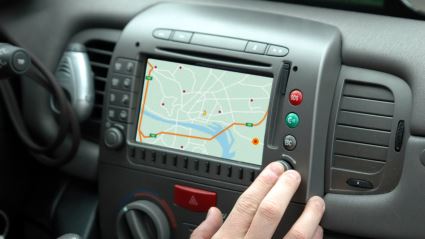
Global Positioning System (GPS) is one of the most transformative technologies of the modern age, revolutionizing navigation, communication, and numerous other sectors worldwide. While often associated with everyday smartphone use, GPS technology encompasses a complex network of satellites, ground stations, and sophisticated algorithms that work seamlessly to provide real-time positioning data. Beyond GPS, other countries have developed their own satellite navigation systems, including Russia's GLONASS, Europe's Galileo, and China's BeiDou, each contributing to the advancement and redundancy of global navigation.
Understanding the structure and functioning of GPS requires a deep dive into satellite networks, signal transmission, and the science behind positional accuracy. As of today, approximately 32 satellites are actively orbiting the Earth, forming a constellation crucial for global coverage. These satellites work in harmony to ensure continuous and reliable navigation services across the entire planet. Achieving global coverage necessitates a minimum of 24 satellites, but with current configurations, an additional eight satellites help maintain system integrity during maintenance or unexpected outages. The satellite network's redundancy allows users to access precise location information under various conditions, from urban environments to remote wilderness.
One of the core principles behind GPS operation is the line of sight concept. Despite the presence of multiple satellites, the system only requires signals from at least four satellites to accurately determine a user's position. These signals, traveling at the speed of light, provide timing information that, when processed, reveals latitude, longitude, altitude, and velocity. This process is akin to triangulation, where the intersection of signals from multiple sources pinpoints a precise location.
Relativity also plays a significant role in maintaining GPS accuracy. According to Einstein's theory of relativity, the flow of time is affected by gravity and motion. GPS satellites experience a different rate of time passage compared to clocks on Earth's surface. The onboard atomic clocks are affected by both special and general relativity, causing a time discrepancy of about 38 microseconds per day. If uncorrected, this small difference could lead to navigation errors of several miles. Hence, precise adjustments are made to satellite clocks to ensure the system's reliability.
Although GPS technology originated in military applications, it was made publicly accessible in the early 2000s, transforming everyday life. Managed by government agencies, GPS is now an indispensable tool across various industries and services. Its multifunctionality extends beyond simple navigation to applications like accurate timekeeping, fleet management, and emergency services.
Precision time synchronization is facilitated by onboard atomic clocks, which enable GPS to serve as a global time standard. This feature is essential for telecommunications, financial transactions, and scientific research. Additionally, GPS plays a vital role in safety and health sectors—specialized devices equipped with GPS are used to assist individuals with Alzheimer's by enabling their exact location to be tracked in case they wander.
Navigation and transportation heavily depend on GPS technology. Not only for automobiles but also for maritime vessels and aircraft, GPS ensures safe and efficient transit across continents and oceans. The technology also supports autonomous vehicles, aiding navigation in complex environments and improving overall safety standards.
In conclusion, GPS continues to evolve with advancements in satellite technology, signal processing, and integration with other systems. Its impact on everyday life and industry is profound, enabling a connected and efficient world. As more countries develop their own satellite navigation systems, the future of global positioning technology looks promising, offering enhanced accuracy, security, and redundancy for users worldwide.