
Comprehensive Guide to Warehouse Cranes: Types, Features, and Cost Determinants
Explore this detailed guide to warehouse cranes, covering various types, their specific features, and the key factors affecting their prices. Discover how to select the right crane for your warehouse operations, ensuring safety, efficiency, and cost-effectiveness in handling goods. Learn about gantry, jib, bridge, workstation, and monorail cranes, along with considerations like load capacity, installation, and operational costs. Ideal for warehouse managers, engineers, and logistics professionals seeking comprehensive knowledge for smarter material handling investments.
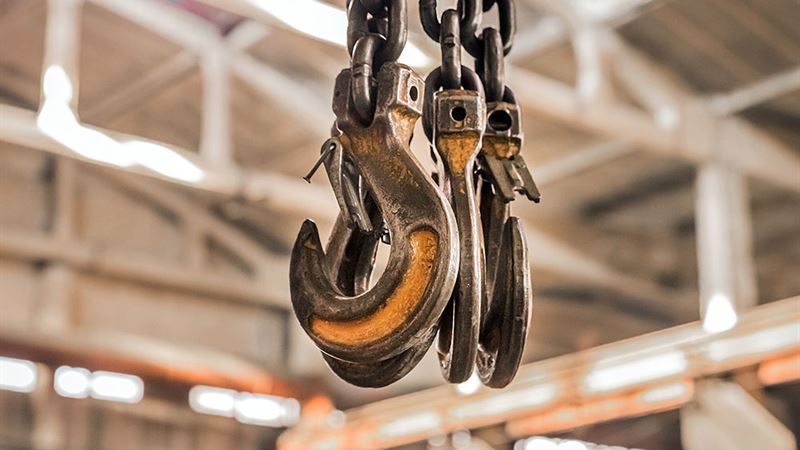
Warehouse cranes are designed to facilitate the safe and efficient movement of goods within confined spaces, reducing manual labor and minimizing injury risks. The selection of an appropriate crane depends on multiple factors, including the nature of the cargo, the building structure, budget considerations, and operational complexity. This comprehensive guide explores the various types of warehouse cranes, their unique features, and the key aspects affecting their pricing.
Understanding Warehouse Crane Types and Their Functions
The diversity among warehouse cranes stems from their mechanical design and operational capabilities. The optimal choice hinges on the specific needs of the facility, such as load size, movement range, and environmental conditions. Below, we delve into the most common crane types used across warehouses worldwide, highlighting their advantages, limitations, and suitability for various tasks.
- Gantry Cranes: These versatile cranes, often called portal cranes, are characterized by their sturdy A-frame or rectangular support structure that spans a designated area. The supporting legs sit on wheels or rails, allowing mobility along the warehouse floor or predefined tracks. Gantry cranes excel at handling medium to heavy loads and are favored in manufacturing and shipping yards for their adaptability and cost-effectiveness.
Gantry cranes can be categorized further into adjustable, portable, or track-mounted variants. Adjustable gantries are popular in environments where cargo moves along aisles or around obstacles, enabling vertical and lateral adjustments. Portable gantries provide excellent flexibility for relocating heavy machinery or equipment, while track-mounted versions are ideal for repetitive tasks along fixed paths. The main considerations include size, load capacity, and mobility features, which directly influence the overall cost and application scope. - Jib Cranes: Usually found in construction sites, workshops, or loading docks, jib cranes possess a stationary base with a horizontal arm (the jib) that extends outwards, enabling vertical and lateral movement of objects within a limited radius. They are typically mounted on the floor or wall, with many models capable of 180° to 360° rotation.
Jib cranes are valued for their simplicity, ease of operation, and ability to handle moderate loads efficiently. Customization options include fixed or adjustable jib lengths and wall or floor mounting. Their affordability and straightforward design make them suitable for quick lifts in confined spaces, though their limited reach necessitates additional cranes for broader applications. - Bridge Cranes: A dominant presence in large warehouses, manufacturing plants, and distribution centers, bridge cranes span the width or length of a building. They comprise a movable hoist mounted on parallel runways supported by structural columns or the building’s roof.
These cranes excel at heavy lift capacities and long-distance handling within a designated area. Variants include top-running and under-running types, with configurations like single or double girder designs, each suited for different levels of load and movement precision. Their large size, complex installation requirements, and high lifting capacity contribute to their higher acquisition and operational costs. They are instrumental where continuous, high-volume material movement is necessary. - Workstation Cranes: Designed with ergonomics and efficiency in mind, workstation cranes serve individual workbenches or specific operational zones within a warehouse. Usually modular, they can be installed using existing support structures and are optimized for lifting lighter loads, typically up to 2 tons or less.
These cranes are frequently used in assembly lines, packaging stations, or quality check points, facilitating repetitive tasks. Their compact design conserves space and improves worker productivity, making them cost-efficient solutions for specialized tasks. - Monorail Cranes: Monorail systems are lightweight, track-mounted cranes that move along a single, curved or straight track laid on the floor or overhead structures. These cranes are ideal for moving cargo over short distances and are often integrated into manufacturing or assembly lines.
The ability to traverse both straight and curved paths grants flexibility, allowing operators to optimize space utilization and workflow. Monorail cranes are particularly suitable for repetitive, controlled movements within confined spaces, enhancing operational safety and efficiency.
Key Factors Influencing Warehouse Crane Costs
The investment in a warehouse crane depends on multiple interrelated aspects, each impacting the total purchase and operational costs. The primary determinants include crane type, load capacity, lift height, and span length. Additionally, installation complexity, structural requirements, control systems, and environmental conditions play significant roles in pricing.
For instance, a small gantry crane designed for light loads will be substantially less expensive than a large, double-girder bridge crane capable of lifting several tons over long distances. The height at which loads are lifted and the horizontal distance the crane must cover directly influence materials, engineering, and installation efforts.
Other cost factors encompass the duty cycle (how frequently the crane is used), required safety features, automation integrations, and customization options. The specific structural reinforcement needed within the warehouse, such as tracks, supports, or building modifications, can further add to the overall expenditure. Understanding these variables ensures procurement decisions align with operational needs and budget constraints, optimizing long-term efficiency and cost savings.