
Comprehensive Guide to Forklifts: Types, Applications, and Pricing Insights
This comprehensive guide explores various forklift types, their specific applications in industries, and estimated costs. From indoor pallet jacks to outdoor heavy-duty machines, learn how to select the right equipment for your business needs. Enhance safety, efficiency, and productivity with expert insights into forklift innovations and investment considerations.
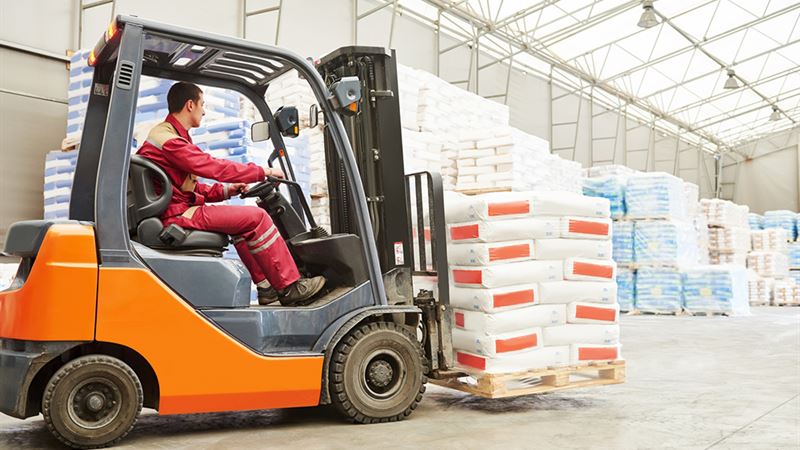
Forklifts are essential machines in various industries, facilitating heavy lifting and efficient movement of goods. Their compact design allows them to operate seamlessly in confined spaces, making them indispensable in warehouse management, construction sites, manufacturing plants, and outdoor industrial operations. Understanding the different types of forklifts, their specific uses, and cost considerations is crucial for businesses aiming to optimize their material handling processes and investment returns.
With advancements in technology and design, forklifts have diversified to meet particular operational needs. From indoor pallet handling to outdoor heavy-duty transport, there is a forklift tailored to every task. In this comprehensive guide, we explore the various types of forklifts, their features and applications, and estimated costs, providing insights to help you choose the right equipment for your business.
1. Manual and Powered Pallet Jacks
One of the most fundamental and widely used types of forklift equipment is the pallet jack, available in manual and powered versions. Manual pallet jacks, often called hand trucks, operate purely on physical effort. They are ideal for light duty tasks and short-distance moves within warehouses or retail stores.
The manual pallet jacks are simple devices where the operator pushes or pulls the handle to maneuver the load. Their lightweight construction and straightforward design make them economical and easy to maintain. Cost-wise, a standard manual pallet jack can be purchased at approximately MXN3,500 to MXN6,000, making it an affordable option for small businesses or occasional use.
Powered pallet jacks, on the other hand, are motorized units that offer increased efficiency and ease of use, especially for heavier loads and longer distances. Most powered models operate on a 24-volt battery system, which ensures smooth operation and minimal downtime. These units are highly effective in high-volume warehouses where moving a large number of pallets quickly is essential. The cost of a new powered pallet jack typically starts at around MXN25,000, but high-end models with advanced features can be significantly more expensive.
In summary, pallet jacks serve as the backbone of many warehouse operations, providing a cost-effective and efficient way to handle pallets in both small-scale and large operational settings.
2. Counterbalance Forklifts
The counterbalance forklift is one of the most recognizable and versatile types of industrial forklifts. Its design features a set of extended forks at the front intended for lifting heavy loads, balanced by a counterweight at the back. This design ensures stability and safety during lifting operations, especially when handling bulky or heavy items.
Counterbalance forklifts are suitable for both indoor and outdoor environments, though their typical usage is indoors in warehouses, manufacturing plants, and distribution centers. They come in different configurations, most notably with 3 or 4 wheels. The 3-wheel variant is often preferred due to its exceptional maneuverability, allowing a full 360-degree rotation that is advantageous in tight spaces.
Manufacturers offer these forklifts in various sizes and load capacities. Smaller models can lift around MXN15,000 to MXN20,000, while more robust units capable of handling larger loads often start at MXN64,000 or more. The heavy rear counterweight ensures stability when lifting and transporting loads, making them a staple in material handling operations.
Counterbalance forklifts excel in applications involving pallet movements, stacking, and stacking heavy loads in warehouse aisles. Their durability and straightforward operation make them popular choices for many industrial environments.
3. Side Loader Forklifts
Specialized for narrow aisles and tight spaces, side loader forklifts are distinct with their side-mounted fork carriage. This unique configuration allows operators to lift and transport loads sideways without requiring the forklift to turn, significantly enhancing efficiency in confined environments.
Thanks to their design, side loader forklifts are especially valuable in industries where space is limited, such as steel manufacturing, metal fabrication, and steel storage warehouses. They can reach quite high—sometimes exceeding 20 feet—to facilitate loading and unloading on high shelves. These forklifts are also equipped with high lifting capacities, making them suitable for heavy loads.
The cost of a new side loader forklift is typically around MXN825,000, reflecting their advanced engineering and specialized functionality. Maintenance and operational training are essential due to their complex mechanisms.
In addition to their efficiency in tight spaces, side loaders improve safety by reducing the need for complex turning maneuvers and minimizing operating risks in high-density storage areas.
4. Order Picker Forklifts
Order pickers are a unique class of forklifts designed primarily for indoor order fulfillment activities. Unlike standard forklifts that handle pallets or solid loads, order pickers are specifically designed to elevate operators to reach high shelves, enabling precise picking of individual items or small batches.
This equipment is highly valued in e-commerce warehouses, distribution centers, and retail storage facilities where speed and accuracy are critical. Operators stand on a platform that can be raised to various heights, often up to 30 feet, allowing them to access high-level racks efficiently.
Costing approximately MXN150,000 for a new unit, order pickers offer excellent ergonomics and safety features, facilitating high productivity levels and reducing labor costs. Their ability to selectively pick items without moving entire pallets streamlines order fulfillment and inventory management.
5. Telehandlers (Telescopic Forklifts)
Telehandlers, commonly known as telescopic forklifts, are large, highly versatile machines designed for outdoor operations. Unlike standard forklifts, they feature an extendable boom arm, which can reach significant heights and distances—up to 55 feet in some models.
Equipped with attachments such as forks, buckets, or lifting hooks, telehandlers are suited for construction, agriculture, logging, and heavy industrial work. Their robust build allows them to lift substantial loads—typically weighing up to 5,500 pounds or more—and operate in challenging terrains.
Their cost reflects their advanced capabilities, with new telehandlers priced around MXN1,300,000 or higher. They are invaluable for tasks like lifting materials to high elevations on construction sites, loading trucks, or transporting heavy items across uneven surfaces.
Operators require specialized training to operate telehandlers safely, but their efficiency and reach make them a preferred choice for outdoor heavy-lift applications.
6. Heavy-Duty Industrial Forklifts
Designed for the most demanding lifting tasks, heavy-duty forklifts handle exceptionally heavy loads. They are pivotal in industries like steel manufacturing, shipbuilding, lumber yards, and mining. These machines come in various sizes and load capacities, ranging from 30,000 to over 100,000 pounds.
Heavy-duty models are typically built with reinforced frames, high-capacity hydraulics, and powerful engines to manage extreme weights reliably. They use standard fork mechanisms but are engineered to withstand rigorous use in harsh environments.
The price range begins at around MXN1,020,000, depending on size, capacity, and features. Due to their size and power, operating and maintenance require skilled personnel and adherence to safety standards.
They are an essential investment for industries where the safe and efficient handling of massive items—like steel coils, logs, or shipping containers—is vital.
7. Reach Trucks
Reach trucks are specialized indoor forklifts optimized for warehouses with high shelving systems. Their defining feature is the ability to extend their forks vertically to 22–45 feet, enabling storage and retrieval of goods at extreme heights.
The open and high-visibility operator compartment facilitates precise maneuvering, even in narrow aisles. Reach trucks excel in maximizing vertical storage efficiency, making them ideal for high-density warehouses and distribution hubs.
Entry-level models start at approximately MXN184,000. Despite their limited lateral turning radius, their compact footprint and high reach make them invaluable for space optimization in large storage facilities.
8. Rough Terrain Forklifts
For outdoor applications involving uneven or rugged terrain, rough terrain forklifts are the go-to equipment. Distinguished by their large, rugged tires and reinforced chassis, these forklifts can operate on muddy grounds, rocky pathways, snow-covered lands, and other challenging surfaces.
They are commonly utilized in construction, mining, forestry, and agriculture industries, where mobility over rough landscapes is essential. Their durability and stability enable efficient lifting, loading, and transporting tasks in environments not suitable for standard forklifts.
The typical cost of a rough terrain forklift is around MXN342,000, reflecting their specialized engineering and robustness.
Operators must be trained in handling these heavy-duty machines, which are designed to withstand harsh conditions while maintaining safety and productivity.
Investing in the correct forklift type tailored to your operational needs can significantly enhance productivity, safety, and cost efficiency. Whether opting for a compact pallet jack or a large outdoor telehandler, understanding the features and costs involved empowers businesses to make informed decisions that support growth and operational excellence.