
Comprehensive Guide to Different Types of Puppets for Children
Explore a detailed guide to various puppet types suitable for children, including hand puppets, finger puppets, rod puppets, marionettes, and ventriloquist figures. Learn their features, ideal usage scenarios, and how they can foster creativity, storytelling, and educational growth in kids. Perfect for parents, teachers, and performers aiming to select the best puppets for developing skills and providing entertainment.
Puppets have been captivating children and adults alike for centuries, serving as tools for storytelling, education, and entertainment. With numerous styles and designs available today, selecting the right puppet for your child's age and interests can enhance their creative development and provide endless hours of fun. In this detailed guide, we explore the most popular and diverse types of puppets suitable for children, highlighting their features, advantages, and ideal usage scenarios. From simple hand puppets to complex marionettes, understanding these options helps parents and educators choose the best puppets to foster imagination and learning.
Hand Puppets: The Classic Choice for Play and Learning
Hand puppets, often called glove puppets, are among the most widely used puppets in children's entertainment. These puppets are designed to fit over your hand, with the puppeter manipulating the puppet's head and mouth using fingers. Many hand puppets feature expressive faces and large, colorful designs to attract children's attention. Some models include moving mouths and arms, adding to their expressive capability, while more simplified versions lack movable parts but still evoke lively interactions. Their ease of use makes them ideal for young children to learn storytelling, social skills, and emotional expression. Because they are lightweight and easy to handle, hand puppets are perfect for casual play, educational activities, and puppet shows at schools or home settings.
Finger Puppets: Small but Mighty for Miniature Play
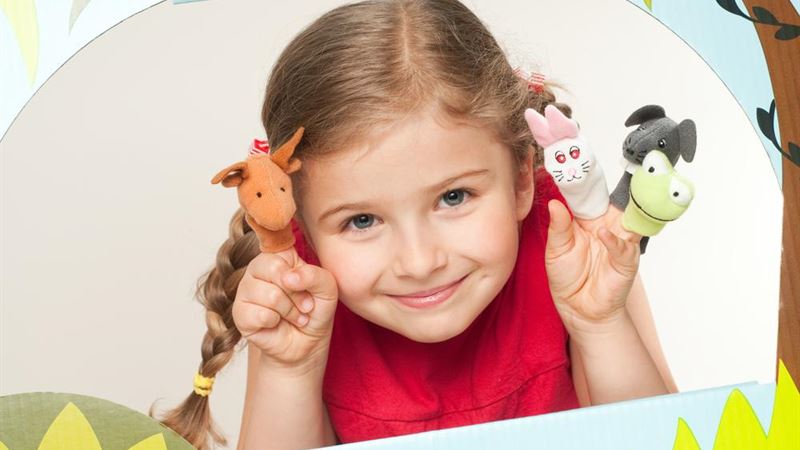
Finger puppets are tiny, simple puppets that fit snugly onto individual fingers. Designed as miniature characters, these puppets are usually cap-like and cover just the tips of fingers, making them highly portable and easy to use. They are especially popular among children under five, who enjoy creating stories with a series of finger characters. Because finger puppets typically lack movable parts, children use their voice and creative storytelling skills to bring their characters to life. These puppets are fantastic for imaginative play, educational storytelling, and developing language skills. They also serve as effective teaching tools for school teachers and parents to engage children during phonics, basic storytelling, or social interaction exercises. Despite their small size, kids of all ages often find finger puppets charming and engaging, making them a versatile addition to any puppet collection.
Rod Puppets: For Skilled Performers and Advanced Puppeteering
Rod puppets involve the use of sticks or rods attached to various parts of the puppet's body, such as the arms, legs, or torso. Usually operated from below a stage or platform, puppeteers use these rods to control movements precisely, making them suitable for more detailed performances. Some variations have rods facing upwards, allowing the puppeteer to manipulate the puppet from above. These puppets typically require skill and practice to operate smoothly, making them more suitable for older children, teens, or professional puppeteers. They are commonly used in theater shows, puppet performances, and cultural festivals to showcase storytelling talent and craftsmanship. Although more complex than hand or finger puppets, rod puppets allow for sophisticated and expressive movements, enriching the storytelling experience for audiences.
Hand and Rod Puppets: Combining Techniques for Dynamic Performances
This type of puppet combines the manipulation of hand puppets with rod puppets, providing a versatile tool for puppeteers. In this setup, one hand is responsible for controlling the puppet's mouth and head, while the other uses rods to move the arms or other parts of the puppet. This dual control offers expressive range and allows for more complex character portrayals. These puppets are ideal for aspiring performers or educators seeking to enhance their storytelling skills. They offer a degree of sophistication suitable for school plays, puppet shows, or casual family performances, making them an excellent investment for those who want a more engaging puppet experience.
Marionettes: The Art of String Manipulation for Advanced Puppetry
Marionettes, also known as string puppets, represent some of the most intricate and visually captivating puppets available. Each movement of the puppet’s limbs is controlled by strings attached to various points on the body, often totaling eight or more, sometimes up to thirty for complex models. Operating a marionette requires dexterity, coordination, and practice, as puppeteers need to master manipulating multiple strings simultaneously to produce lifelike movements. Traditionally used in theatrical performances and stage shows, marionettes are suited for skilled puppeteers who can bring characters to life with nuanced gestures and expressions. Their sophistication and aesthetic appeal make them ideal for artistic performances, cultural demonstrations, and educational purposes where the emphasis is on craftsmanship and storytelling excellence. Learning to operate a marionette can be challenging but rewarding, offering a unique way to explore traditional puppetry techniques.
Ventriloquist Figures: The Lifelike Characters for Entertaining Acts
Ventriloquist figures are highly realistic puppets controlled with one hand, allowing the performer to create the illusion of a speaking character. They are often used by comedians and entertainers to engage audiences with humor, jokes, and storytelling. These figures are designed to mimic human features, with detailed facial expressions and movable mouths. Their portability makes them perfect for street performances, TV shows, or live stage acts. However, mastering ventriloquism—making the puppet speak without moving the lips—is a skill that requires practice and technique. Despite the challenge, ventriloquist puppets are popular among aspiring performers and can serve as captivating educational tools for speech therapy and confidence building. Their ability to entertain and educate simultaneously makes them a valuable addition to any puppet repertoire.
Overall, choosing the right type of puppet depends on the child's age, skill level, and interests. Whether for casual play, educational use, or theatrical performance, understanding these varied options can help you select the most suitable puppet to foster creativity, learning, and fun for your little ones. Investing in quality puppets encourages storytelling, boosts imagination, and introduces children to the rich tradition of puppetry arts, which continue to inspire generations across the globe.