
Harnessing Weather Radar Technology for Accurate Weather Forecasting
Explore the significance of weather radar technology in modern meteorology, its operation principles, wavelength choices, and recent technological advancements that enhance weather prediction accuracy. Learn how radar data integrates with forecasting models to improve storm tracking, precipitation estimates, and severe weather alerts, contributing significantly to public safety and climate studies.
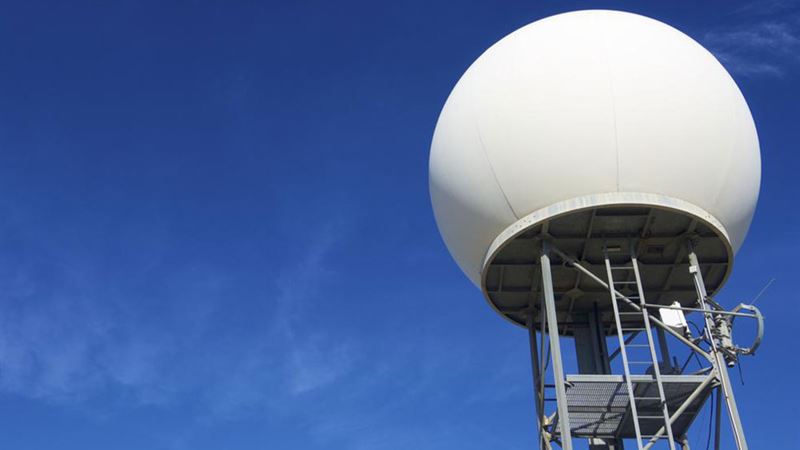
Weather radars are vital tools in modern meteorology, providing crucial data that enhance our understanding and prediction of weather patterns. Since their inception, these systems have undergone significant technological advancements, enabling meteorologists to detect and analyze various atmospheric phenomena with remarkable precision. Weather radars facilitate short-term weather forecasts, track severe storms, and monitor precipitation levels, making them indispensable for weather services worldwide. The development of sophisticated software algorithms allows the conversion of radar data into actionable insights, improving the accuracy of predictions for rain, snow, hail, and other weather events. Furthermore, radar outputs are integrated into complex numerical weather prediction models, augmenting their reliability and helping authorities prepare better for adverse weather conditions.
Fundamentally, weather radars operate on the principle of microwave radiation transmission. They emit highly focused directional pulses using powerful microwave sources such as cavity magnetrons or klystron tubes, which are connected to large parabolic antennas. These pulses, typically lasting only microseconds, travel through the atmosphere and bounce off particles like raindrops, snowflakes, or ice crystals. The returned signals, or echoes, are then processed to derive detailed information about the location, intensity, and movement of precipitation. The wavelength of the emitted microwave radiation—usually around 10 centimeters (known as the S-band)—is carefully chosen to optimize detection across various particle sizes while minimizing signal attenuation.
The wavelength selection is a balancing act; shorter wavelengths can detect smaller particles but tend to suffer from high attenuation, reducing the signal's strength over distance. Consequently, the industry prefers the 10 cm (S-band) radar system for general weather monitoring due to its effective range and sensitivity. More compact systems operating at 3 cm (X-band) are used for shorter-range applications like urban weather surveillance, while the 1 cm (Ka-band) radar is primarily employed for specialized research topics such as studying minute particles in fog or drizzle.
One of the challenges of weather radar operations is the dispersal of radar pulses as they propagate through the atmosphere. The further the radar signal travels, the larger the volume of air it scans, leading to a decrease in spatial resolution. Close to the radar station, the resolution can be very fine, detecting small-scale weather features; at distances up to 150–200 kilometers, the volume monitored may be approximately one cubic kilometer per pulse. This phenomenon, known as pulse spreading or beam widening, affects the level of detail and accuracy available for distant weather phenomena but is mitigated by advanced signal processing techniques and iterative data analysis.
Modern weather radars are equipped with digital signal processing and adaptive algorithms that can filter noise, identify false echoes caused by anomalies, and distinguish between different types of precipitation. These capabilities have drastically improved the fidelity of radar-based rainfall estimation and storm tracking. Many weather agencies utilize Doppler radar technology, which measures the velocity of particles within storms, providing critical insights into wind patterns, rotation, and potential tornado formation. The integration of Doppler data with other meteorological observations enhances the ability to forecast severe weather events accurately. Additionally, radar data are now incorporated into numerical weather prediction models, which use vast mathematical computations to simulate future atmospheric states, thereby refining forecast accuracy and timeliness.
The continuous evolution of weather radar technology promises even greater precision and faster data processing in the future. Emerging developments such as phased array radars, multi-frequency systems, and artificial intelligence-driven data analysis are set to revolutionize modern meteorology. These innovations aim to provide hyper-localized, real-time weather monitoring, which is crucial for disaster preparedness, agricultural planning, and many other sectors relying on timely weather information. As climate variability increases and extreme weather events become more frequent, the importance of advanced radar systems for reliable weather prediction cannot be overstated. By understanding and improving these technologies, meteorologists can deliver more accurate forecasts, helping communities prepare effectively and mitigate weather-related risks.