
Revolutionizing Diabetes Care: The Future of Non-Invasive Glucose Monitoring Devices
Discover the latest advancements in non-invasive, prickless glucose monitoring devices that offer pain-free, continuous, and real-time blood sugar tracking. Learn about various sensing technologies, benefits, limitations, and future trends shaping diabetes management. These innovative tools aim to improve quality of life, providing safer and more convenient options for people living with diabetes.
Understanding Non-Invasive Glucose Monitoring Technologies
Non-invasive glucose monitoring encompasses a variety of technologies designed to measure blood sugar levels without penetrating the skin with needles. This shift from invasive to non-invasive methods is driven by the need for safer, more comfortable, and user-friendly solutions in diabetes management. Among the various techniques, electrical, optical, sweat-based, breath analysis, and emerging sensor technologies are at the forefront.
Electrical Methods for Non-Invasive Glucose Measurement
Electrical sensing techniques are among the promising non-invasive methods for monitoring glucose levels. These techniques involve analyzing electrical signals or impedance changes in tissues to estimate blood glucose concentration. Some notable electrical methods include:
- Impedance Plethysmography: This technique measures changes in electrical impedance caused by variations in blood volume or tissue composition, which correlate with glucose levels.
- Microwave-Based Sensing: Utilizing microwave signals, this method detects dielectric property changes in tissues affected by glucose concentration.
- Bioimpedance Spectroscopy (BIS): BIS assesses the frequency-dependent electrical impedance of tissues, providing insights into glucose variations.
Optical Glucose Monitoring: A Pulsing Promise
Optical sensing technology has gained substantial attention due to its potential for continuous, non-invasive glucose tracking. These devices employ optical sensors that analyze light reflected or transmitted through the skin, using various principles such as spectroscopy, fluorescence, or Raman scattering. Optical methods include:
- Spectroscopic Techniques: Non-invasive spectrometers analyze specific wavelengths absorbed or reflected by glucose molecules.
- Smartphone-Integrated Optical Devices: Portable optical sensors integrated with smartphones enable accessible glucose monitoring anytime, anywhere.
- Wearable Optical Sensors: Devices embedded in wristbands, patches, or contact lenses facilitate ongoing glucose measurement without discomfort.
Continuous Glucose Monitoring Systems: Real-Time Data at Your Fingertips
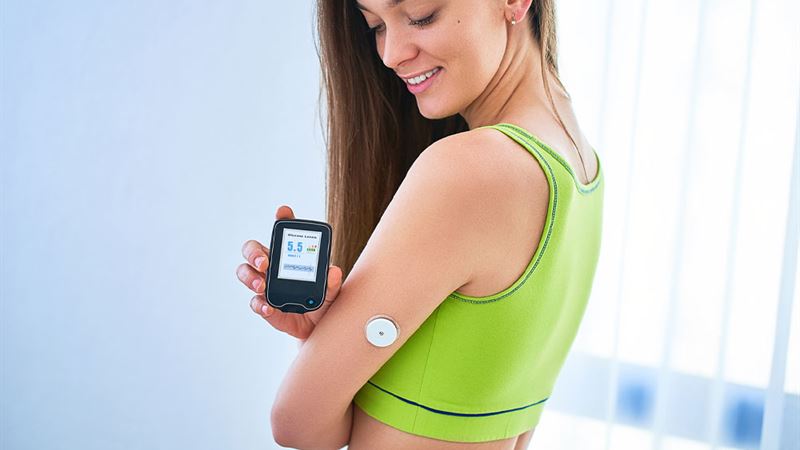
Continuous Glucose Monitoring (CGM) systems have revolutionized the management of diabetes by providing real-time data on blood glucose levels. Unlike traditional pricking methods that offer only snapshots, CGM devices offer continuous tracking, trend analysis, and alert systems, empowering users with better insights and control over their condition. A typical CGM system comprises:
- A tiny sensor inserted subcutaneously that measures glucose in interstitial fluid.
- A transmitter that wirelessly sends data to a receiver or smartphone app.
- Advanced algorithms that analyze glucose trends and predict possible fluctuations, alerting users before critical levels are reached.
Innovative Sweat-Based and Breath Analysis Techniques
Emerging non-invasive methods such as sweat analysis and breath testing are gaining traction due to their simplicity and feasibility. These techniques analyze metabolites in sweat or volatile organic compounds (VOCs) in exhaled breath to estimate blood glucose levels.
Sweat-Based Glucose Monitoring
Sweat contains various biochemical markers, including glucose. Devices designed to analyze sweat can provide continuous, painless monitoring without the need for blood samples. Sensors integrated into wearable patches or smartwatches detect glucose levels through skin contact, making the process both discreet and practical.
Breath Analysis for Glucose Detection
Breath analysis involves capturing and analyzing exhaled air to identify specific compounds like acetone or isoprene, which correlate with blood glucose levels. Portable breathalyzers or sensor arrays can provide quick, non-invasive assessments, offering a promising alternative for those who prefer avoiding blood-based testing.
Future Trends: Innovating Non-Invasive Glucose Monitoring
As demand for seamless, non-invasive monitoring grows, researchers continue to develop advanced technologies to improve accuracy, usability, and affordability. Emerging innovations include:
- Surface-Enhanced Raman Spectroscopy (SERS): Using nanostructured surfaces to enhance spectral signals for precise detection of glucose molecules.
- Nanomaterial-Based Sensors: Utilizing nanomaterials like graphene or quantum dots to enhance sensor sensitivity and selectivity.
- Plasmonic Sensors: Exploiting surface plasmon resonance effects for real-time, label-free glucose measurement.
- Optical Fiber Sensors: Flexible fiber-optic sensors that can be integrated into wearable devices for continuous monitoring.
- Smartphone-Based Technologies: Developing apps and attachments that turn everyday phones into portable glucose analyzers.
- Artificial Intelligence (AI): Integrating AI algorithms to improve data accuracy, interpret trends, and predict glycemic events.
- Combination of Technologies: Merging multiple sensing modalities for enhanced reliability and comprehensive glycemic control.
Advantages of Prickless Glucose Monitors
Prickless glucose monitoring devices provide numerous benefits over traditional testing methods, improving patient experience and health outcomes:
- Non-Invasive Procedure: Eliminates the discomfort, pain, and risk associated with finger pricks and blood sampling.
- Enhanced Convenience: Users can monitor their glucose levels effortlessly, without additional supplies like lancets or test strips.
- Continuous Monitoring: Offers real-time data, trend analysis, and alerts, facilitating proactive diabetes management.
- Lower Infection and Wound Risks: Reduced risk of infections related to skin punctures and wounds.
- Improved Quality of Life: Reduces daily burden, stress, and discomfort, leading to better adherence and overall well-being.
Challenges and Limitations
Despite their advantages, prickless glucose meters face certain hurdles that need addressing for widespread adoption:
- Measurement Accuracy: Ensuring consistent precision comparable to traditional finger-prick tests remains challenging due to biological and environmental variables.
- Cost Considerations: Advanced sensors and continuous monitoring systems can be expensive initially and require ongoing purchases of sensors or components, potentially limiting accessibility.
- Calibration and Maintenance: Some devices require calibration or specific setup, which may complicate daily use.
- Interference Factors: Environmental factors like sweat, skin condition, and external substances can impact device performance.
- Technological Reliability: As with all emerging tech, ensuring long-term durability and consistent performance is vital for user trust.
Conclusion: The Future of Glucose Monitoring
The evolution from invasive finger pricks to non-invasive, prickless glucose meters signifies a groundbreaking shift in diabetes management. These devices are transforming patient experiences by offering safer, more comfortable, and more efficient monitoring options. Continued research and technological innovation promise to further enhance accuracy, affordability, and usability, paving the way for universal adoption. As the industry advances, integrating multichannel sensing, AI, and wearable technology will undoubtedly make diabetes care more accessible and less burdensome for millions worldwide.